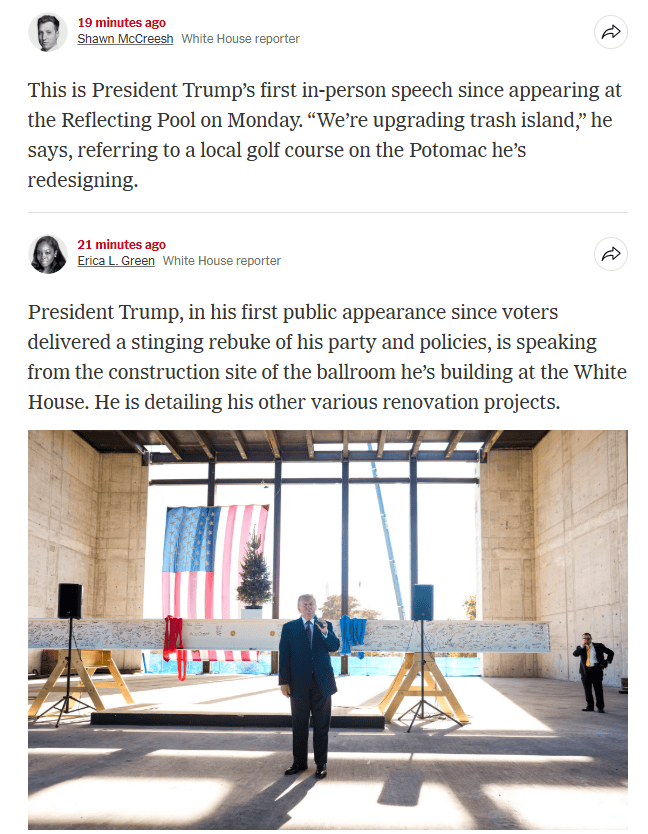
Following recent high-stakes elections, the political landscape is witnessing significant shifts that have left leadership priorities under intense scrutiny. As major press outlets update race results showing legislative gains for opposing parties, public discourse has increasingly focused on the stark contrast between pressing national concerns and high-profile administrative projects.
At the center of public attention is the reaction of leadership in the wake of substantial electoral setbacks. Rather than addressing core economic pressures such as the rising costs of gas, food, and housing, public briefings have frequently drifted toward domestic infrastructure renovations, aesthetic upgrades to government properties, and proposed public monuments.
The Disconnect Over Public Priorities
For many observers, the emphasis on luxury developments and national decor during a period of voter discontent highlights a growing gap between leadership focus and everyday citizen concerns. As working families navigate cost-of-living challenges, discussions regarding marble finishes, reflecting pools, and ceremonial ballrooms have drawn sharp criticism across the political spectrum.
One observer highlighted this contrast directly, contrasting public economic needs with administrative focus:
"Americans - Price for gas, food and housing is too high! What can you do to help alleviate that? Trump - the best I can do is rename stuff that no one cares about, renovate buildings that the vast majority of Americans will never see the inside of, paint the bottom of the reflecting pool and build a national monument that no one is asking for."
Critics argue that focusing on vanity projects during significant political realignments reflects a refusal to engage with the reality of legislative power, particularly as budget control rests firmly with Congress.
Party Dynamics and Strategic Recalibration
The electoral outcomes have also sparked debate about the future of party leadership and internal dynamics. With severe electoral losses across key districts, questions remain over whether congressional allies will maintain their alignment or begin cutting ties to chart an independent political path.
Some analysts point out that political calculations often shift rapidly following major electoral defeats, though long-standing party habits can be difficult to break. As one commentator noted regarding party alignment and internal leadership:
"I'm still laughing at the suggestion that Republicans are getting angry because Trump keeps talking about these pet construction projects.... Like they'd ever dare do anything about it. There are reasons why we got here. GOP lack of leadership is at the top of that list."
Another voice weighed in on the likelihood of significant political shifts among lawmakers post-election:
"It's pretty rare for a politician to suddenly grow a spine... Especially when they've had Stockholm syndrome"
Historical Parallels and Future Outlook
The dramatic imagery of a leader focused on architectural grandiosity amid changing political fortunes has drawn literary and historical comparisons. Observers have drawn parallels to classical reflections on power and its fleeting nature, citing timeless themes of grand ambitions remaining isolated from practical realities.
As legislative bodies prepare to convene under new power distributions, funding for unchecked projects faces growing resistance. With congressional purse strings expected to tighten, administrative focus may soon be forced to shift from aesthetic ambition back to the fundamental governance issues facing the electorate.